




The Princess of the Atom 1950 Avon Fantasy Novel No. 1 Ray Cummings First Book Edition
$34.00
🚀 **The Princess of the Atom by Ray Cummings — the novel that launched Avon’s Fantasy series, originally serialized in 1929**
*First book edition of a pulp science fiction classic, now a collector’s landmark*
**HISTORICAL CONTEXT**
This 1950 Avon paperback is the first book publication of a story originally serialized in Argosy All-Story Weekly in September 1929 — over two decades earlier. It launched Avon’s Fantasy Novels line as No. 1, making it the inaugural title in a series that would define postwar paperback science fiction. Original price: 25 cents.
**THE STORY**
“The Princess of the Atom” is one of the “Space” stories in Ray Cummings’ ambitious “Matter, Space, and Time” sequence of novels. The plot involves a journey through subatomic scale to a hidden world within an atom, giants rising from the sea to threaten American cities, and a confrontation with an “Atomic Napoleon” whose ambitions threaten the world. The dedication reads: “To my son, Hal, and to Russ, my son-in-law — both chemists — this story is appropriately and affectionately dedicated.”
**COVER ART AND DESIGN**
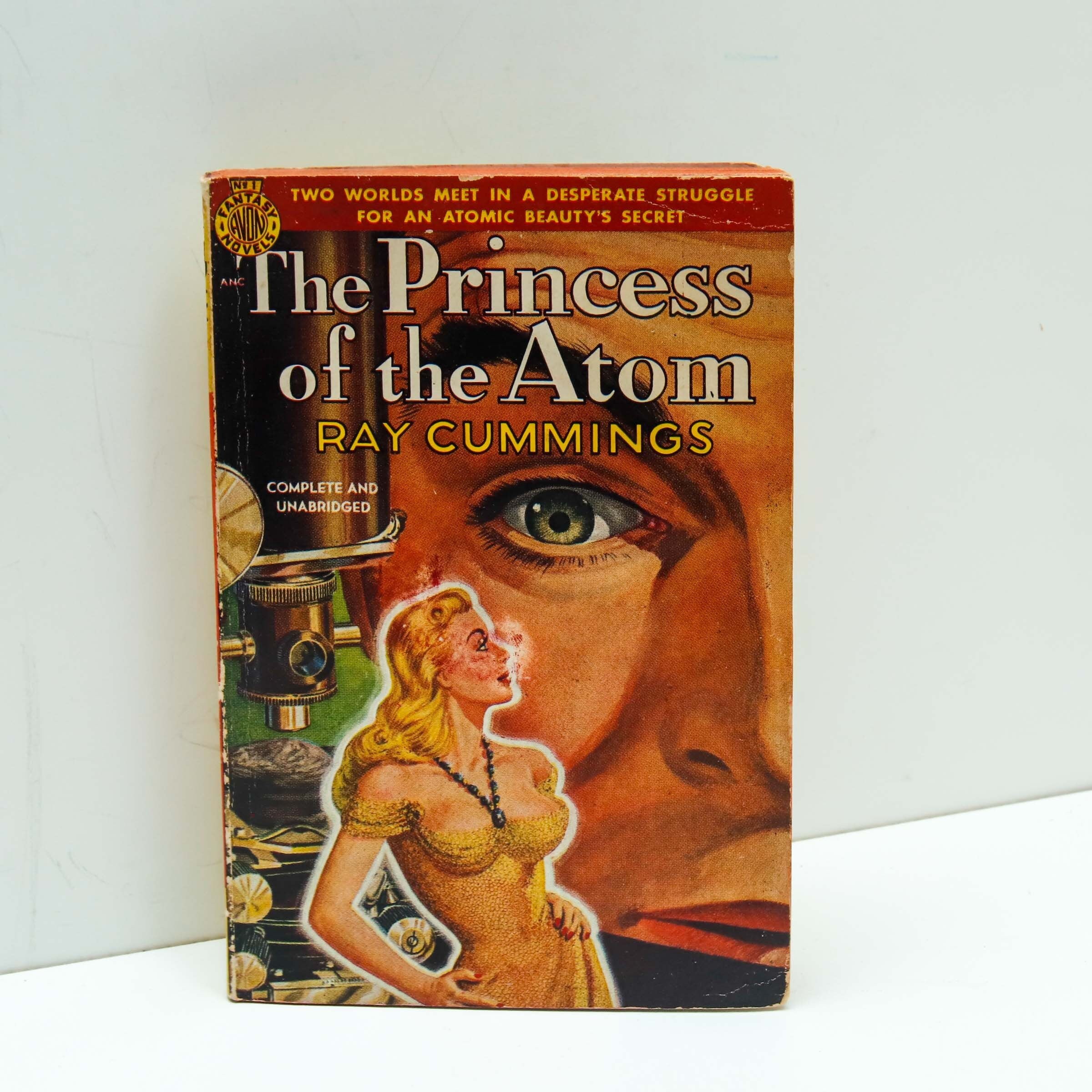
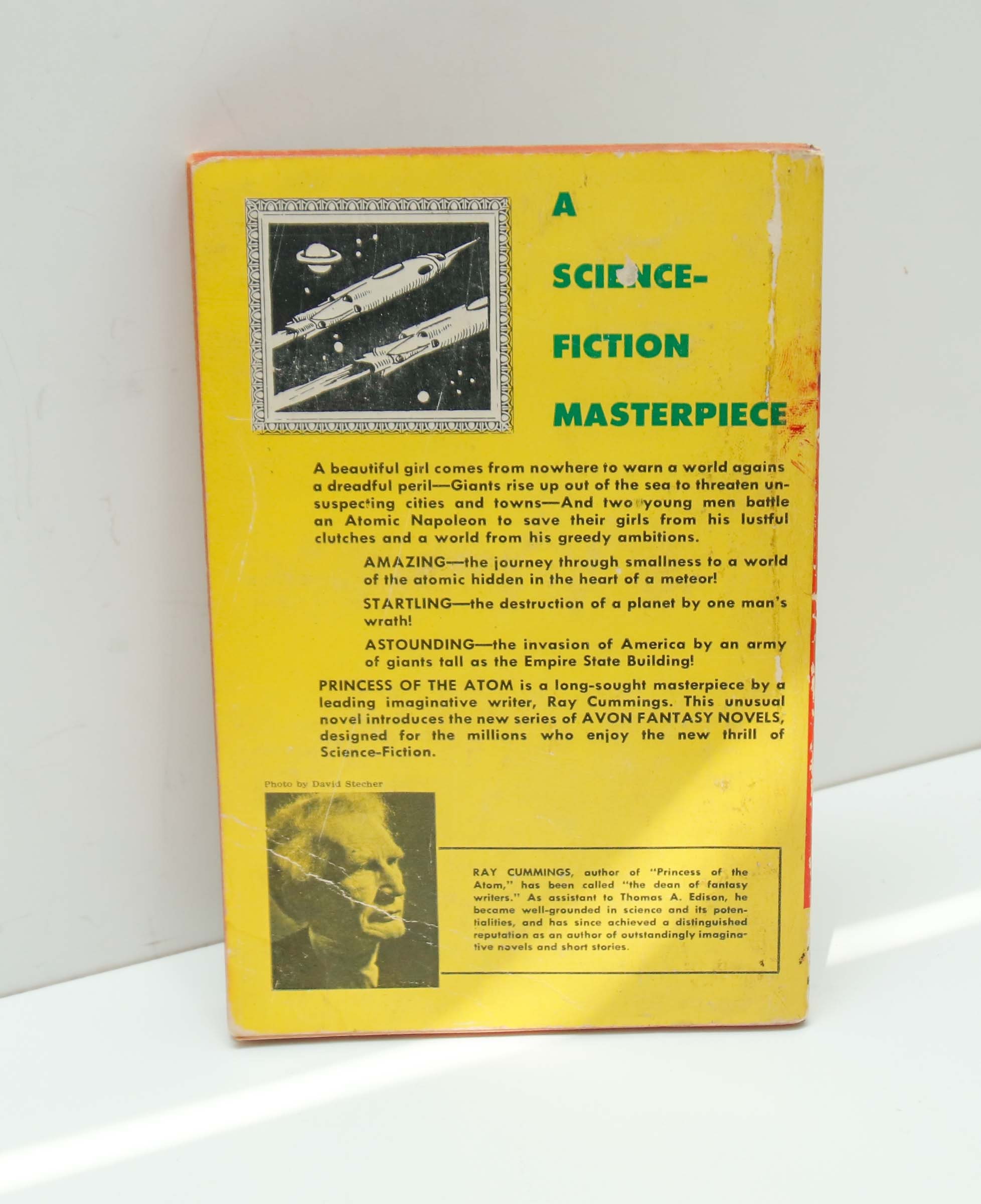
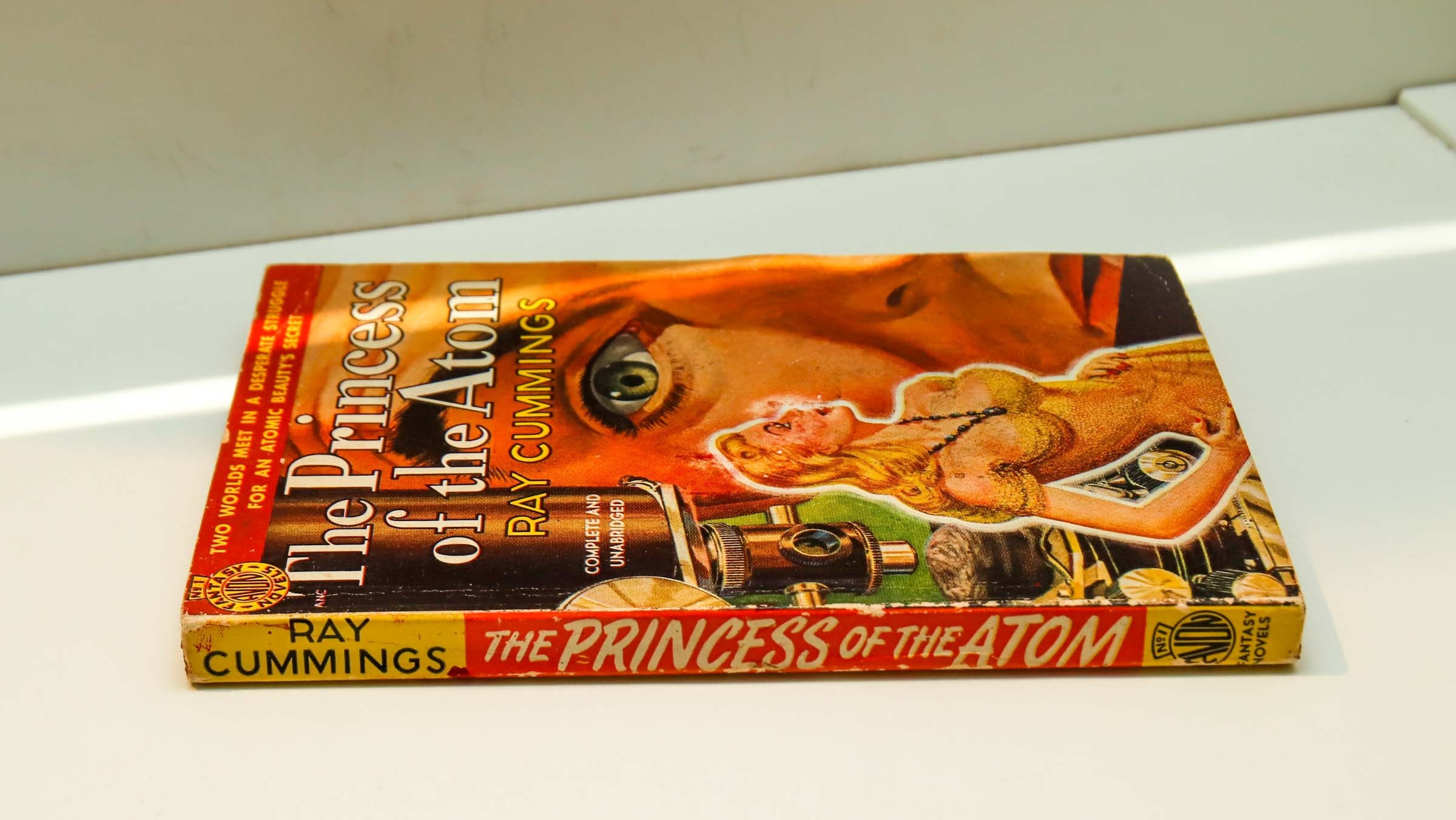
The front cover features dramatic pulp-era artwork: a large, intense green eye dominates the right side, suggesting surveillance or an all-seeing presence. A blonde woman in a shimmering golden dress stands in profile, wearing a dark beaded necklace. Scientific equipment — possibly a microscope or laboratory instrument — appears in metallic brass and silver tones. The color palette is warm and saturated: oranges, yellows, and reds contrasted with deep greens. The back cover is yellow with red-edged borders, featuring a black-and-white illustration of spacecraft in orbit above a planet, a black-and-white photograph of the author credited to David Stecher, and the tagline “A Science-Fiction Masterpiece.” The spine is red with title and author. Text on the cover notes “Complete and Unabridged.”
**WHY IT MATTERS**
– Ray Cummings (1887-1957) was called “the dean of fantasy writers” and is rated one of the founding fathers of the science fiction pulp genre
– He worked as Thomas Edison’s personal assistant from 1914 to 1919, writing labels for Edison Records — giving his science fiction a grounding in real technical knowledge
– This Avon edition is Fantasy Novel No. 1, the first book in the series that introduced science fiction to mainstream paperback readers
– Originally published by Frank A. Munsey Co. in 1929; the 1950 Avon copyright marks its transition from serial to standalone book
– During the 1940s, Cummings anonymously scripted comic book stories for Timely Comics (predecessor to Marvel), recycling his Golden Atom plots for Captain America
**FOR COLLECTORS**
As the first title in Avon’s Fantasy Novels line, this copy holds a place in publishing history — the book that kicked off one of the most recognizable paperback imprints of the postwar era. Finding a copy with an intact spine and clean interior in a 1950 mass-market paperback is uncommon.
—
**CONDITION:**
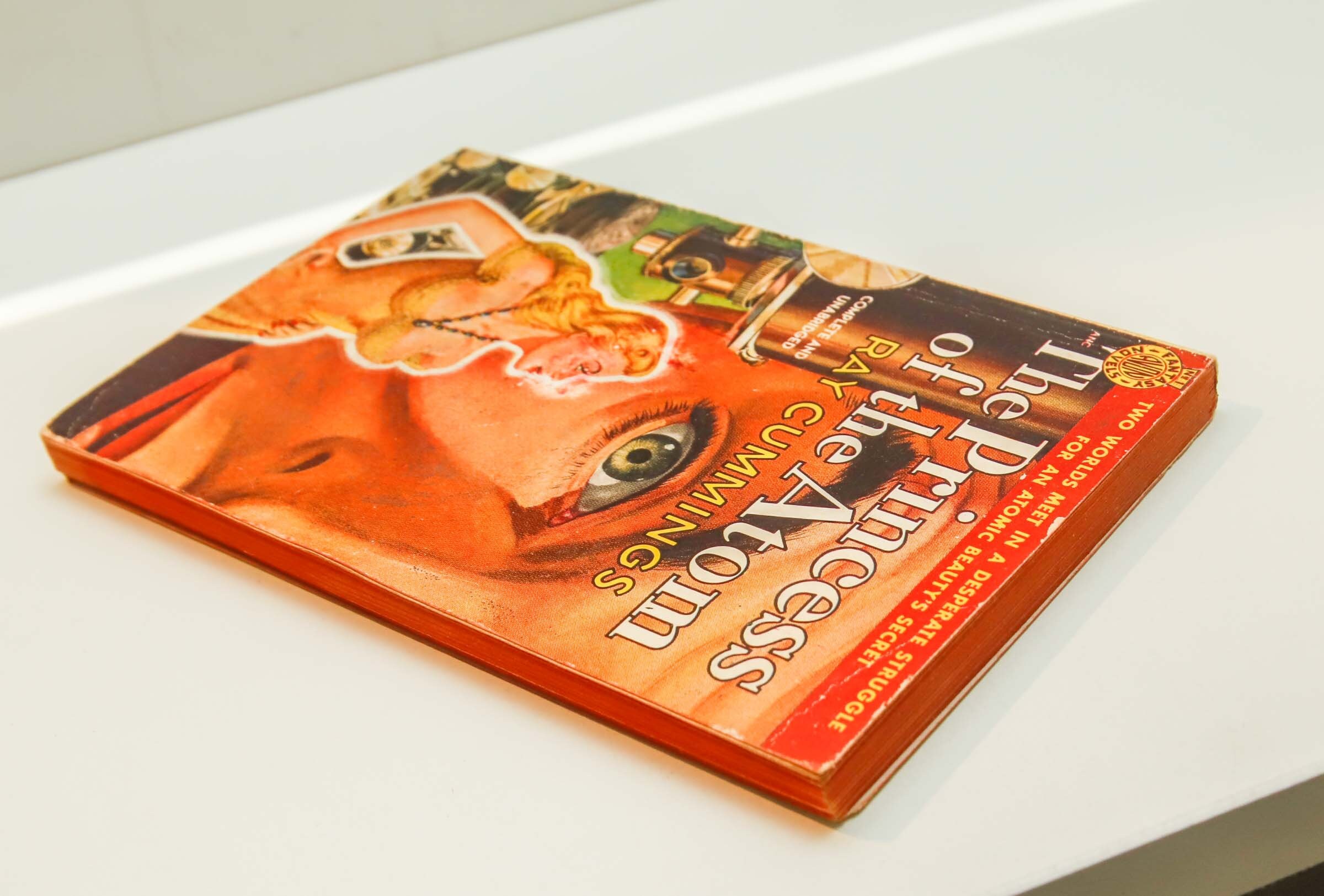
“Very good -” vintage paperback with an intact spine, not cracked or creased, just a hint of a little roll in the upper portion. The text is relatively square and closes flat and tightly. No loose, torn or folded pages, no writing. The covers have some light creasing, more so on the back with most pronounced being on the back lower corner across the authors image (see accompanying images). Text block is tinted on all sides, mostly uniform, with exception being the lower corner where it might be from moisture exposure, nothing visible on the pages themselves. The back cover has some surface rubbing along upper portion by spine and a reddish smudge that looks like it might have been from the publisher.
A really fun vintage gem with amazing period cover art!
Will ship promptly, carefully packaged and fully insured.
An interesting sidenote:
This story was recycled by the author when he was writing for Timely Comics – the predecessor to Marvel Comics in Captain America #23 & 26.
—
HFB-SEO-v1: 2026-07-11
1 in stock
Related products
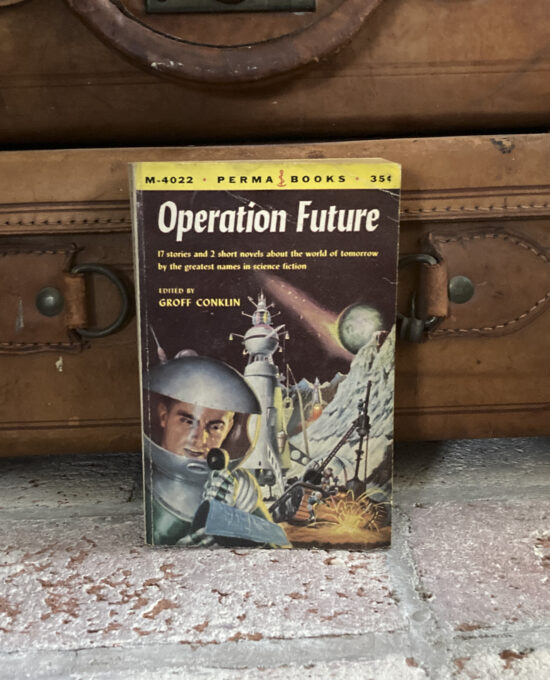

Groff Conklin (Editor) “Operation Future” Vintage Paperback 1955
Groff Conklin (Editor) “Operation Future” Vintage Paperback 1955
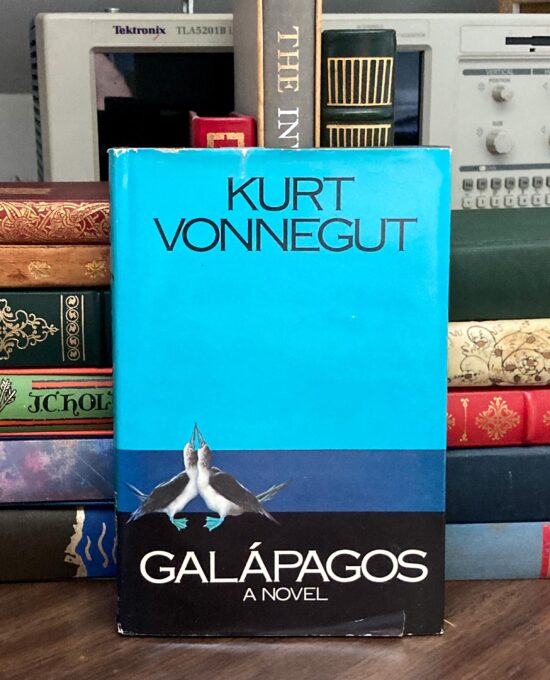
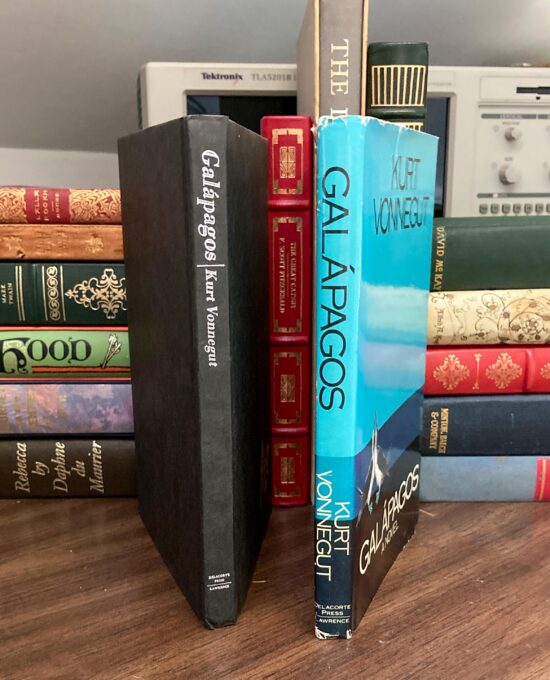
Galapagos Kurt Vonnegut 1985 Science Fiction Book Club Hardcover
Tight vintage hardcover with crisp, solid binding. No loose, torn or folded pages, no writing. Board corners are crisp, not bumped. Spine head and heal lightly bumped. Board wraps are uniform all around, not tanned, spotted or faded. Text block edges are uniform. Titling on the spine and front board is bright, not rubbed or faded. Matching vintage dust wrapper is clipped inside lower front flap. Has some closed 1/2" tears and small edge chips here and there, most notable at flap fold corners and spine edges. Color is uniform all around, not sunned. Small scotch tape repair on upper front edge. See the accompanying images for table of contents & full condition details. Will ship promptly, carefully packaged, with tracking.
Galapagos Kurt Vonnegut 1985 Science Fiction Book Club Hardcover
Tight vintage hardcover with crisp, solid binding. No loose, torn or folded pages, no writing. Board corners are crisp, not bumped. Spine head and heal lightly bumped. Board wraps are uniform all around, not tanned, spotted or faded. Text block edges are uniform. Titling on the spine and front board is bright, not rubbed or faded. Matching vintage dust wrapper is clipped inside lower front flap. Has some closed 1/2" tears and small edge chips here and there, most notable at flap fold corners and spine edges. Color is uniform all around, not sunned. Small scotch tape repair on upper front edge. See the accompanying images for table of contents & full condition details. Will ship promptly, carefully packaged, with tracking.
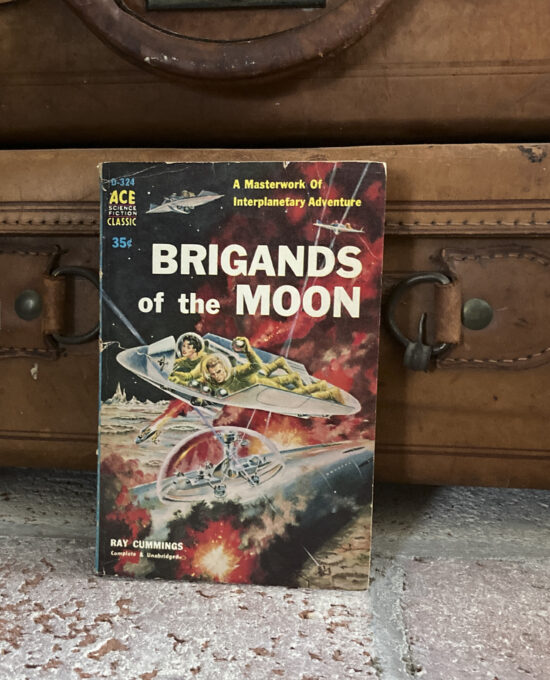
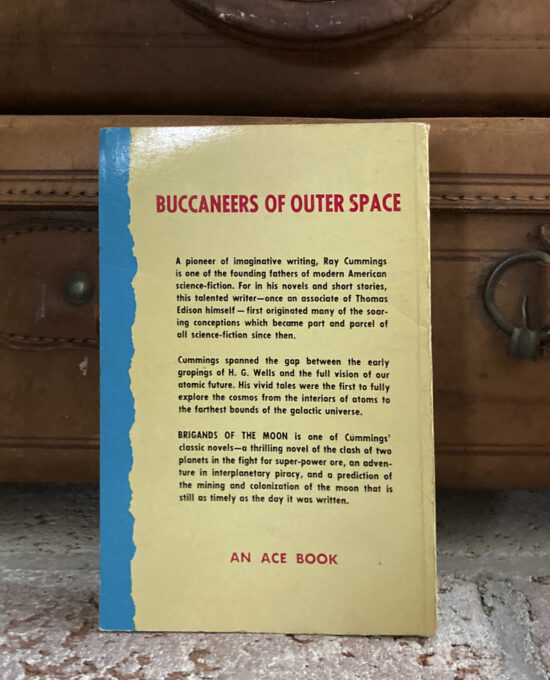
Brigands of the Moon Ray Cummings Ace D-324
First Ace edition of Cummings' 1931 space opera, complete & unabridged. Ed Emshwiller cover. D-324, original 35¢ price. VG- condition.
Brigands of the Moon Ray Cummings Ace D-324
First Ace edition of Cummings' 1931 space opera, complete & unabridged. Ed Emshwiller cover. D-324, original 35¢ price. VG- condition.
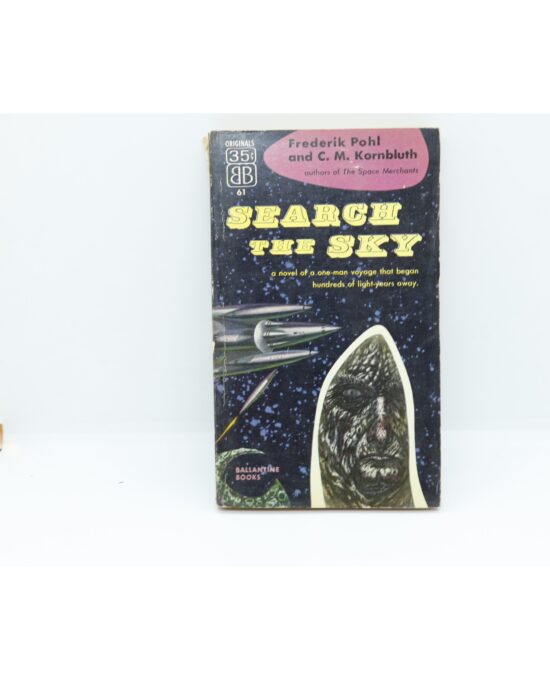
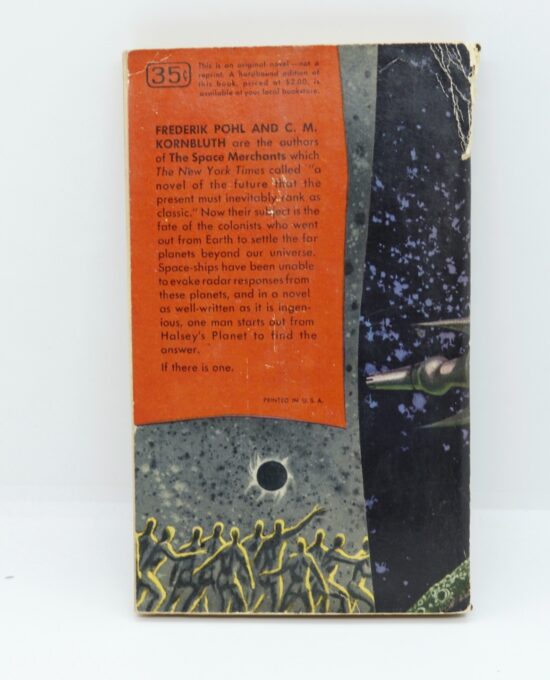
Frederik Pohl and C. M. Kornbluth “Search the Sky” First Edition Vintage Paperback 1954
Reviews
There are no reviews yet.