


Michael Crichton “Congo” Vintage first edition hardcover novel 1980 Dustjacket
$98.00
This is a “very good” vintage hardcover in two-color wraps – black paper boards over maroon cloth spine, published in 1980 by Knopf. First edition, as stated on the copyright page.
Tight vintage hardcover with crisp, solid binding. No loose, torn or folded pages, no writing. Board corners are crisp, not bumped. Spine head and heal lightly bumped, with upper edges showing some sunning to the cloth, the black board wraps remains uniform. Small scuff to the front paste down. Text block edges are relatively uniform, lower spine edge showing a faint tidemark, upper edge mildly dusted from shelf life. Golden lettering on spine is somewhat rubbed.
Matching vintage dust wrapper is complete, not clipped, showing original price inside front flap. Has some small edge chips here and there, most notable at spine edges. Spine is somewhat sunned, red lettering faded; lower edge shows very faint tide mark. Now protected in a removable archival sleeve.
See the accompanying images for table of contents & full condition details.
Will ship promptly, carefully packaged, with tracking.
Out of stock
Related products
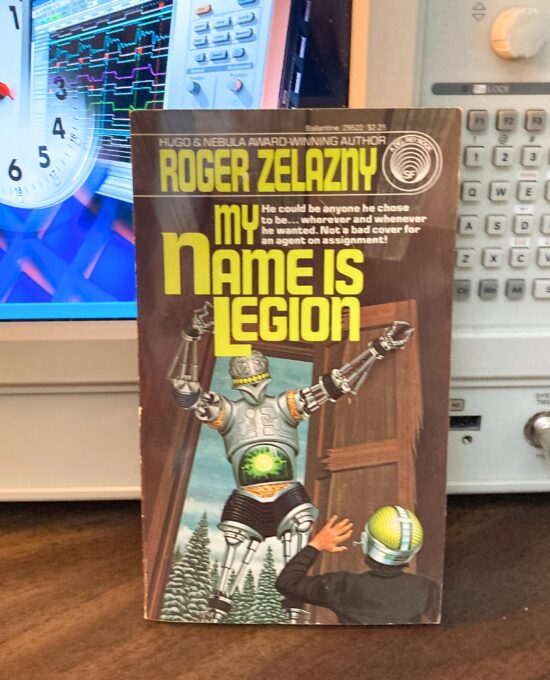
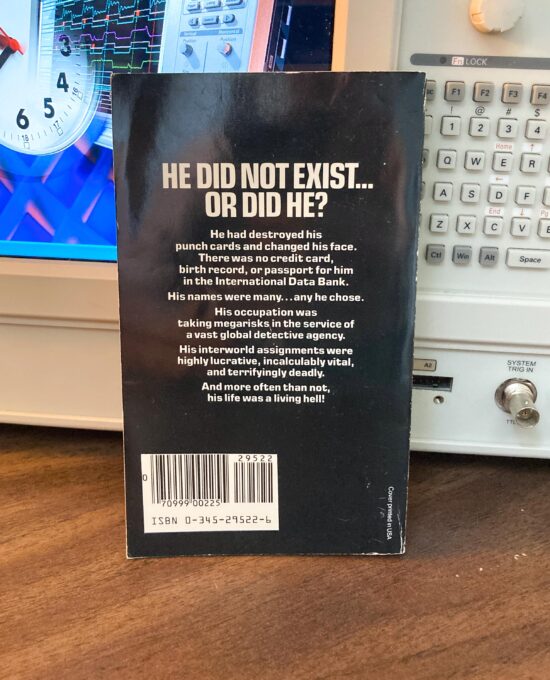
Vintage Sci-Fi Paperback: My Name is Legion by Roger Zelazny, 1981 Edition
Shows slight minimal aging and a little edge wear on covers, but no significant flaws (no writing, tags, marks, loose, torn or folded pages). Certainly a great addition to a vintage science fiction collection and a worthy gift! See the accompanying images for full condition details. Will ship promptly, carefully packaged, with tracking. About the book: "My Name is Legion" by Roger Zelazny is a "science fiction" story line that combines cyberpunk elements with existential depth. The book consists of three interconnected novellas ("The Eve of Ragnarok," "Kjwalll'kje'k'koothaïlll'kje'k," and "'Home is the Hangman") that follow a futuristic investigator known only as "Legion"—a man with no legal identity who manipulates global surveillance systems to solve crimes. The novellas: "The Eve of RUMOKO" – The protagonist must uncover a saboteur on a project using nuclear explosives to create artificial islands. "'Kjwalll'kje'k'koothai'lll'kje'k" – Set at a research station in the Bahamas, the hero investigates a diver’s mysterious death, possibly involving dolphins. "Home Is the Hangman" – A sentient robot, lost years before, may have returned to Earth to kill its creators. These stories are linked by their protagonist and themes of identity, surveillance, and the ethical dilemmas of technology. They are not directly connected to Zelazny’s other famous works like "The Last Defender of Camelot" or "For a Breath I Tarry". Why You Should Read It: 1) Cyberpunk Before Cyberpunk – Zelazny’s vision of a hyper-surveilled society predates Neuromancer and other cyberpunk classics, making it a fascinating proto-cyberpunk gem. 2) Philosophical & Psychological Depth – The protagonist grapples with identity, free will, and the nature of humanity, themes that remain deeply relevant in today’s AI-driven world. 3) Award-Winning Excellence – The final novella, "'Home is the Hangman," won both the Nebula in 1976 and Hugo 1976 for Best Novella. Also nominated for the Locus Award for Best Collection in 1977. If You Enjoyed These, then "My Name is Legion" is likely to be in your wheelhouse: >>John Brunner – The Shockwave Rider (for its take on computer networks and identity) >>Alfred Bester – The Demolished Man (for noir SF with a psychological edge) >>Philip K. Dick – A Scanner Darkly (for its themes of surveillance and shifting identity) Interesting Facts: The second story’s title, "'Kjwalll'kje'k'koothai'lll'kje'k," is intentionally unpronounceable, reflecting the communication barrier between humans and dolphins—a clever nod to the story’s central mystery. The title "My Name is Legion" is a biblical reference, taken from the Gospel of Mark, where a demon identifies himself as "Legion, for we are many." Zelazny chose this title to reflect the protagonist's fragmented identity and his ability to assume different roles and personas. Relevance Today: The themes explored in "My Name is Legion," such as the impact of technology on society and the nature of identity, are still relevant today. Zelazny's vision of a future where technology has blurred the lines between human and machine is both fascinating and cautionary.
Vintage Sci-Fi Paperback: My Name is Legion by Roger Zelazny, 1981 Edition
Shows slight minimal aging and a little edge wear on covers, but no significant flaws (no writing, tags, marks, loose, torn or folded pages). Certainly a great addition to a vintage science fiction collection and a worthy gift! See the accompanying images for full condition details. Will ship promptly, carefully packaged, with tracking. About the book: "My Name is Legion" by Roger Zelazny is a "science fiction" story line that combines cyberpunk elements with existential depth. The book consists of three interconnected novellas ("The Eve of Ragnarok," "Kjwalll'kje'k'koothaïlll'kje'k," and "'Home is the Hangman") that follow a futuristic investigator known only as "Legion"—a man with no legal identity who manipulates global surveillance systems to solve crimes. The novellas: "The Eve of RUMOKO" – The protagonist must uncover a saboteur on a project using nuclear explosives to create artificial islands. "'Kjwalll'kje'k'koothai'lll'kje'k" – Set at a research station in the Bahamas, the hero investigates a diver’s mysterious death, possibly involving dolphins. "Home Is the Hangman" – A sentient robot, lost years before, may have returned to Earth to kill its creators. These stories are linked by their protagonist and themes of identity, surveillance, and the ethical dilemmas of technology. They are not directly connected to Zelazny’s other famous works like "The Last Defender of Camelot" or "For a Breath I Tarry". Why You Should Read It: 1) Cyberpunk Before Cyberpunk – Zelazny’s vision of a hyper-surveilled society predates Neuromancer and other cyberpunk classics, making it a fascinating proto-cyberpunk gem. 2) Philosophical & Psychological Depth – The protagonist grapples with identity, free will, and the nature of humanity, themes that remain deeply relevant in today’s AI-driven world. 3) Award-Winning Excellence – The final novella, "'Home is the Hangman," won both the Nebula in 1976 and Hugo 1976 for Best Novella. Also nominated for the Locus Award for Best Collection in 1977. If You Enjoyed These, then "My Name is Legion" is likely to be in your wheelhouse: >>John Brunner – The Shockwave Rider (for its take on computer networks and identity) >>Alfred Bester – The Demolished Man (for noir SF with a psychological edge) >>Philip K. Dick – A Scanner Darkly (for its themes of surveillance and shifting identity) Interesting Facts: The second story’s title, "'Kjwalll'kje'k'koothai'lll'kje'k," is intentionally unpronounceable, reflecting the communication barrier between humans and dolphins—a clever nod to the story’s central mystery. The title "My Name is Legion" is a biblical reference, taken from the Gospel of Mark, where a demon identifies himself as "Legion, for we are many." Zelazny chose this title to reflect the protagonist's fragmented identity and his ability to assume different roles and personas. Relevance Today: The themes explored in "My Name is Legion," such as the impact of technology on society and the nature of identity, are still relevant today. Zelazny's vision of a future where technology has blurred the lines between human and machine is both fascinating and cautionary.
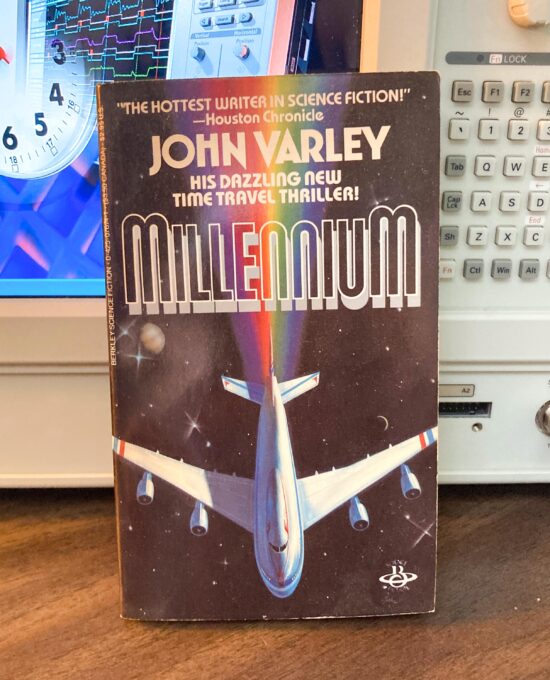
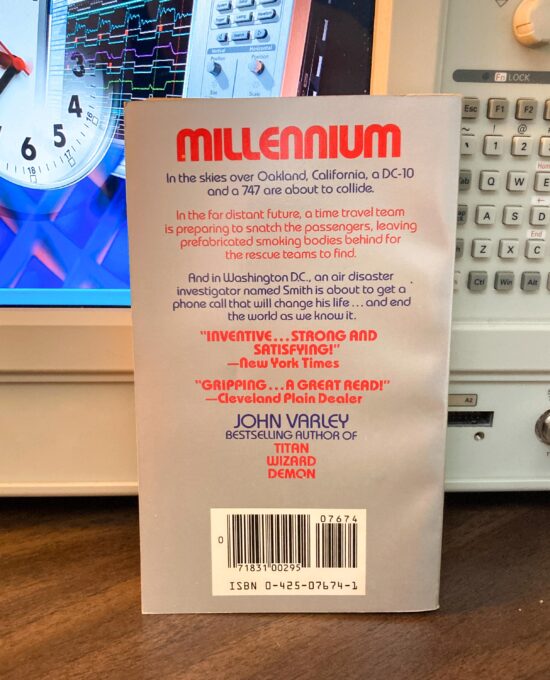
Millennium by John Varley: 1985 First Edition Sci-Fi Paperback
Millennium by John Varley: 1985 First Edition Sci-Fi Paperback
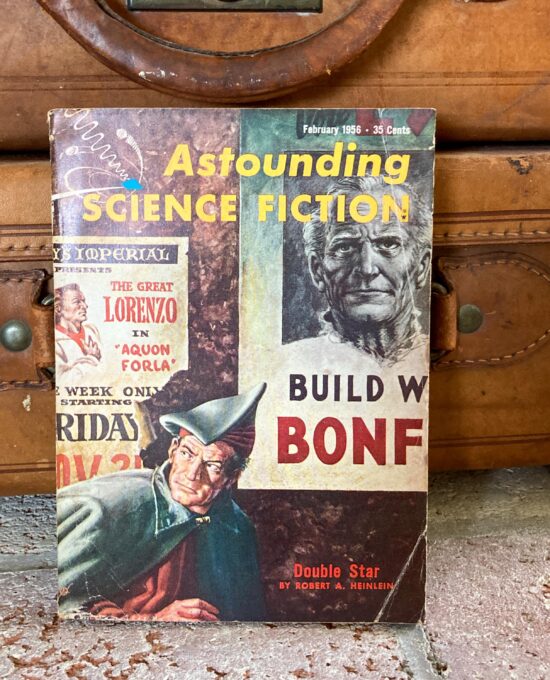
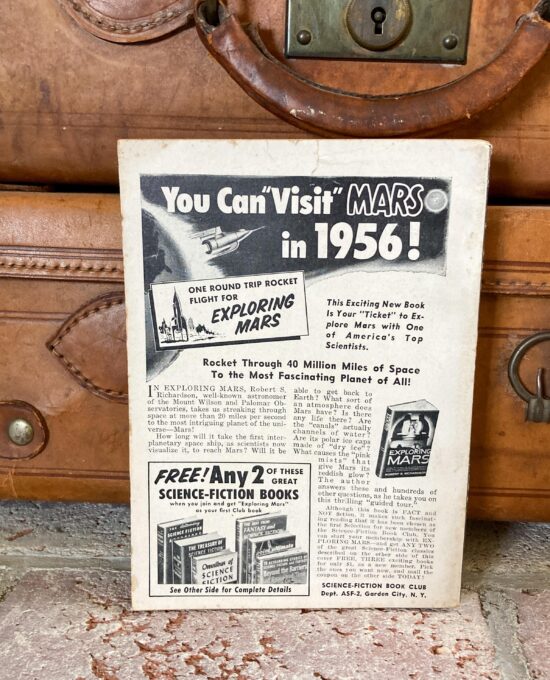
Astounding Science Fiction February 1956 Robert Heinlein Serial
Cool Kelly Freas cover art, with internal art done by Freas, Emsh, and van Dongen. Nice! No loose, torn, or folded pages. Binding is tight and intact. No writing. Pages are tanned on edges and are somewhat brittle, some edge chipping on some See accompanying images for full condition details and table of contents. Will ship promptly, carefully packaged.
Astounding Science Fiction February 1956 Robert Heinlein Serial
Cool Kelly Freas cover art, with internal art done by Freas, Emsh, and van Dongen. Nice! No loose, torn, or folded pages. Binding is tight and intact. No writing. Pages are tanned on edges and are somewhat brittle, some edge chipping on some See accompanying images for full condition details and table of contents. Will ship promptly, carefully packaged.
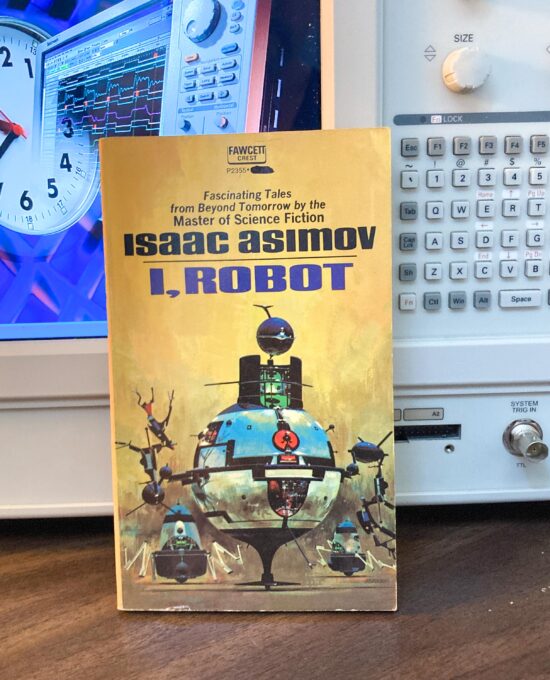
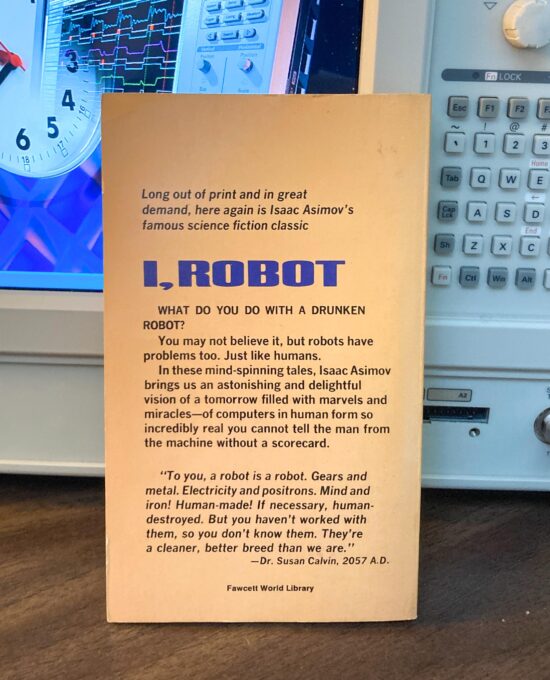
For the Sci Fi Fan “I, Robot” Vintage paperback Isaac Asimov 1970 printing
Mild edge and surface wear on covers, very minimal signs of reading use. Text block is square, closes tightly. A date stamp on the outer text block edge, reading "Apr 28 1975" - likely from a used book store back in the day. A very subtle crease in the spine, not color breaking. Original cover price on front cover and spine blacked out, otherwise no marks or writing. No loose, torn or folded pages. Very presentable 55 year old vintage paperback! Really nice vintage copy! See accompanying images for full condition details. Enter the groundbreaking world of Isaac Asimov's I, Robot, the seminal 1950 collection that forever changed how we imagine artificial intelligence. Through nine interconnected short stories framed by the reminiscences of Dr. Susan Calvin, the pioneering robopsychologist at U.S. Robots and Mechanical Men, Asimov introduces his revolutionary Three Laws of Robotics—the ethical framework that would influence science fiction for generations. From "Robbie," the gentle nursemaid robot who forms an unbreakable bond with a young girl, to the chilling implications of "The Evitable Conflict," where super-intelligent Machines quietly manipulate humanity's future, each tale explores the complex moral landscape where human and artificial minds intersect. Meet Speedy, trapped in a logical loop on Mercury; Herbie, the telepathic robot driven to madness by conflicting imperatives; and Stephen Byerley, the politician whose humanity itself becomes the central mystery. Asimov's robots aren't the rampaging monsters of pulp fiction—they're thoughtful, sometimes flawed beings whose dilemmas mirror our own deepest questions about consciousness, free will, and what it truly means to be human. This vintage collection remains startlingly relevant as we stand on the threshold of real artificial intelligence, making it essential reading for anyone fascinated by the ethical challenges of our technological future. Will ship promptly, carefully packaged.
For the Sci Fi Fan “I, Robot” Vintage paperback Isaac Asimov 1970 printing
Mild edge and surface wear on covers, very minimal signs of reading use. Text block is square, closes tightly. A date stamp on the outer text block edge, reading "Apr 28 1975" - likely from a used book store back in the day. A very subtle crease in the spine, not color breaking. Original cover price on front cover and spine blacked out, otherwise no marks or writing. No loose, torn or folded pages. Very presentable 55 year old vintage paperback! Really nice vintage copy! See accompanying images for full condition details. Enter the groundbreaking world of Isaac Asimov's I, Robot, the seminal 1950 collection that forever changed how we imagine artificial intelligence. Through nine interconnected short stories framed by the reminiscences of Dr. Susan Calvin, the pioneering robopsychologist at U.S. Robots and Mechanical Men, Asimov introduces his revolutionary Three Laws of Robotics—the ethical framework that would influence science fiction for generations. From "Robbie," the gentle nursemaid robot who forms an unbreakable bond with a young girl, to the chilling implications of "The Evitable Conflict," where super-intelligent Machines quietly manipulate humanity's future, each tale explores the complex moral landscape where human and artificial minds intersect. Meet Speedy, trapped in a logical loop on Mercury; Herbie, the telepathic robot driven to madness by conflicting imperatives; and Stephen Byerley, the politician whose humanity itself becomes the central mystery. Asimov's robots aren't the rampaging monsters of pulp fiction—they're thoughtful, sometimes flawed beings whose dilemmas mirror our own deepest questions about consciousness, free will, and what it truly means to be human. This vintage collection remains startlingly relevant as we stand on the threshold of real artificial intelligence, making it essential reading for anyone fascinated by the ethical challenges of our technological future. Will ship promptly, carefully packaged.
Reviews
There are no reviews yet.